The Unexpected Journey to Understanding Work
When COVID-19 forced millions of people to work from home, Linda Schweitzer didn’t experience the sudden revelation that captured headlines. She already knew this story. For nearly two decades, she had been studying why remote work refused to take off, despite its obvious benefits. The pandemic, in her view, simply made visible what she had long been documenting. It exposed the mythology of the office and the gap between how we actually work and what we believe about work.
This isn’t where Linda expected her career to lead. She started in building engineering, pursued an MBA, managed projects, and eventually found her way to a PhD in organizational behaviour. What might look like a winding path became central to everything she would later research and teach.
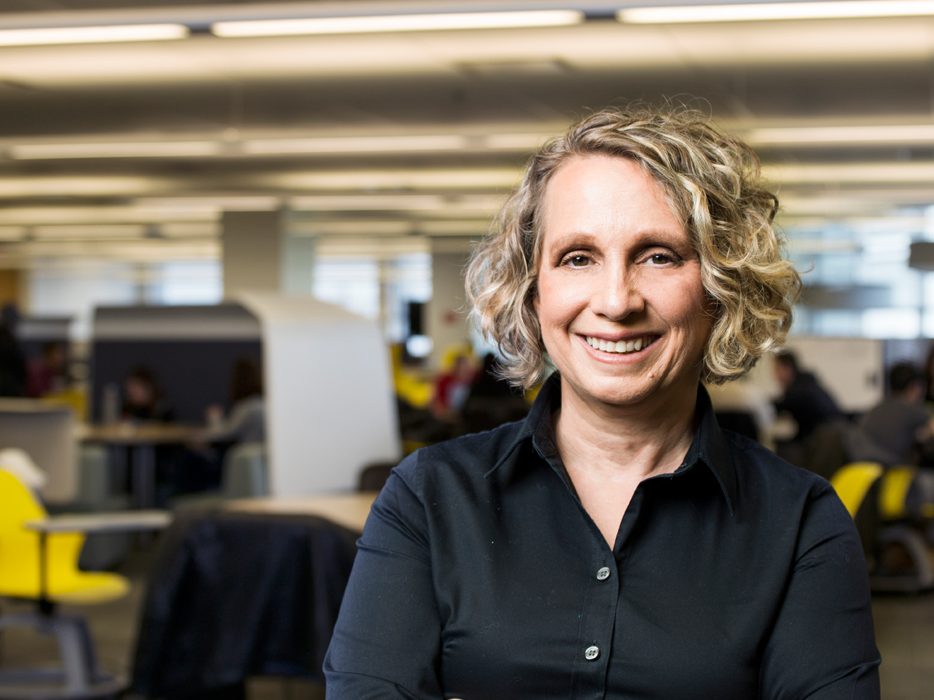
Today, as a senior professor at Sprott School of Business, Linda seeks to be a leading voice challenging the way we think about careers, work arrangements, and organizational management. Her influence stems from having lived the very contradictions she studies, and from a willingness to ask difficult questions that others have stopped asking.
The current research consuming much of her attention emerged directly from pandemic observations. Working with colleagues across Canada, she surveyed hundreds of hybrid workers and documented something organizations seemed reluctant to acknowledge: people felt safer at home. Employees from marginalized groups reported fewer microaggressions when working remotely. People with disabilities reported being able to control their environments in ways the office never allowed. The stress and emotional exhaustion that spiked during in-office days didn’t disappear simply because managers insisted presence mattered.
Then came the harder finding. When organizations began mandating return-to-office policies, people resisted. Not because they were lazy or entitled, but because they had gained something during those pandemic months. Linda drew on conservation of resources theory to explain what happened next, which was that people work harder to protect what they already have than to gain something new. Take away the flexibility people had experienced, and you generate not gratitude for renewed office culture, but resentment.
What strikes anyone who speaks with Linda is how she moves between rigorous research findings and the lived experiences that frame them. She recalls that old television advertisement where a manager judges an employee’s dedication by the presence of a steaming coffee mug, not actual work output. She reflects on her own time as interim dean, working twelve-hour days in the office during a labour disruption while spending evenings alone at home, desperately needing not to see another person.
These aren’t digressions. They’re evidence of her deep belief that our attachment to office-based work is cultural and psychological, not logical. We’ve trained people since kindergarten to work in open spaces around others. We’ve built management practices around visibility rather than output. We’ve confused the appearance of work with actual productivity. And when the pandemic briefly disrupted this system, we immediately sought to restore it, even as our own data showed it wasn’t working.
Linda’s research points toward something more hopeful than simple critique. Her studies suggest that the best outcomes emerge when organizations stop trying to fit all workers into a single model. Instead of arguing about whether people should work from home or in the office, organizations might ask what arrangement actually allows each person to thrive. The specific arrangement matters less than the fit between what people need and what they’re offered.
This philosophy of customized work arrangements reflects Linda’s broader research agenda. For years, she has been challenging how we conceptualize careers and the pressure we place on people to follow linear, upward trajectories. Her work on generational differences in the workplace emerged from the same impulse to map actual lives rather than prescriptive ideals.
What makes Linda effective as a researcher is her refusal to accept easy answers. When managers claim that remote work destroys company culture, she asks what they actually mean and whether they’ve measured it. When employees say they feel isolated at home, she explores what’s really driving that isolation. When organizations implement hybrid policies, she studies the outcomes carefully enough to notice that the worst approaches are those that allow people to come and go without structure, ensuring that no one connects with anyone.
As organizations continue grappling with how to structure work in a post-pandemic landscape, Linda’s research offers something increasingly rare, a clear-eyed assessment of what’s actually working, grounded in voices of real workers across Canada. The stepping stones across the creek might take different paths for different people. The job of leaders and organizations is to help each person find their own path, not to insist everyone climb the same mountain.