Q&A with Asit Kaul
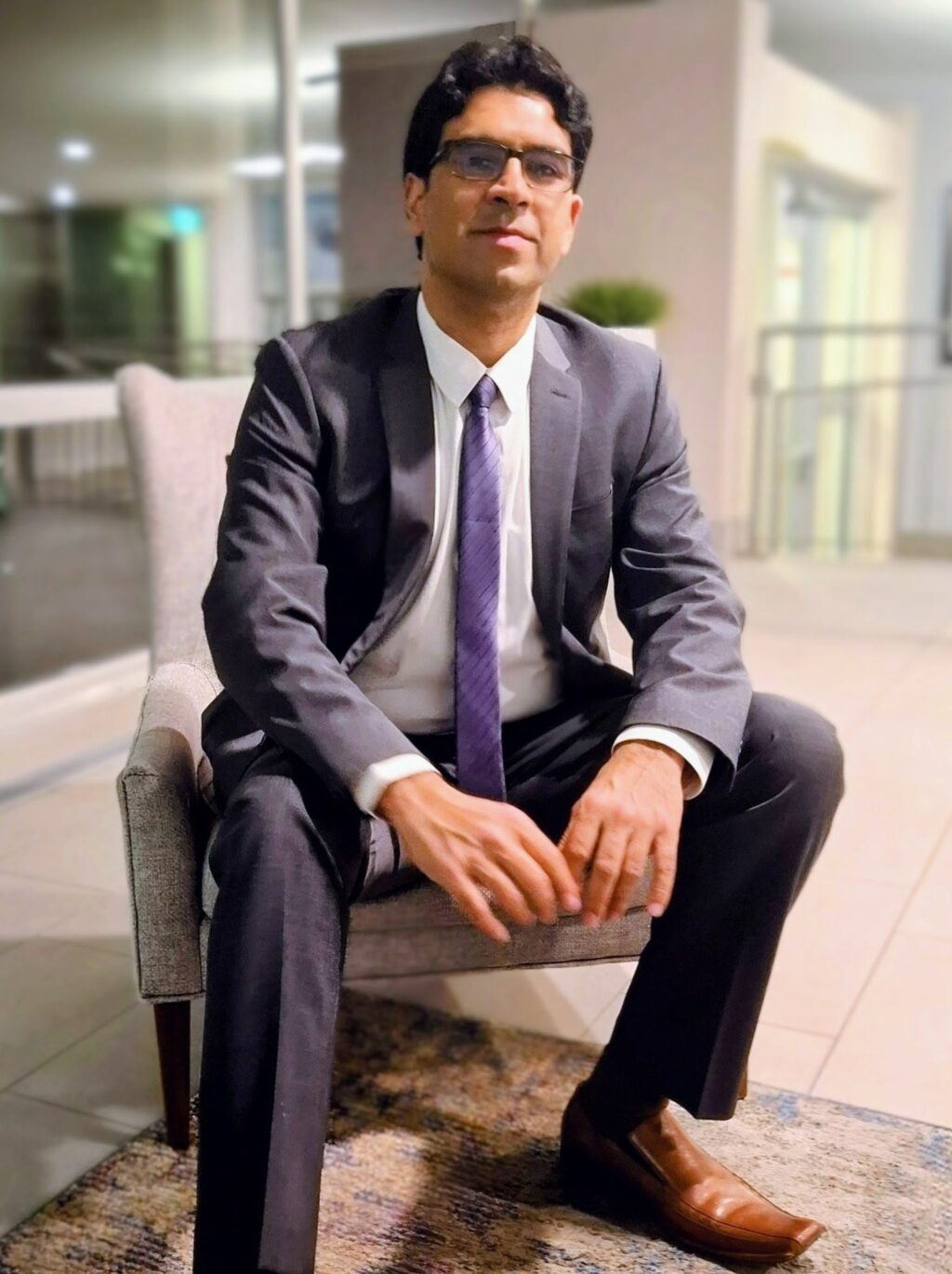
Asit Kaul is a PhD candidate and contract instructor at the Sprott School of Business. With 15 years of senior leadership experience in telecommunications, a certified coaching practice and a parallel career as a keynote speaker and filmmaker, he brings a rare breadth to his research on AI and technology adoption. We sat down to talk about what pulled him back to school, and why understanding how people and organizations embrace emerging technology may be one of the defining questions of our time.
What motivated you to pursue a PhD, and why Sprott?
The pandemic was the turning point. Almost overnight, organizations around the world began accelerating their digital roadmaps. Billions of dollars flooded into automation and cloud infrastructure, and it became clear to me that we were about to see a wave of technological innovation unlike anything in human history. That raised questions I could not let go of: why do intelligent systems succeed in some organizations and not others? Why do some leaders use technology to empower people while others create dependency or resistance? Those questions pulled me toward research. Sprott was the only place I applied. I had done my MBA here, and I knew that theory and practice are not in conflict at Sprott. That matters to me.
How has your thinking evolved since you started?
I began with a broad interest in technology adoption, but as AI developed rapidly, my focus sharpened. Now my research sits at the intersection of strategy, operations, privacy, culture, and identity, because adoption is not just a technical issue. It is deeply human. The shift in my thinking is that I no longer ask, “Does this work?” I ask, “Why does this work, under what conditions, and for whom?”
What are you currently researching?
Three projects are running in parallel. The first looks at AI-driven personalization in online retail. Most people think their phone is listening to their conversations when they see an eerily accurate ad. The reality is far more sophisticated, and understanding how those systems work and how people respond to them matters enormously for privacy and trust. The second examines AI-powered robotic drones for last-mile package delivery, already being piloted by major retailers. These drones can see, speak, and interact with customers. What does it do to a person’s sense of trust to receive a package from a machine? The third examines robotics adoption in healthcare and dentistry, where the stakes for acceptance are especially high.
What problem are you ultimately trying to solve?
There is a growing gap between how fast technology is advancing and how well organizations and consumers understand its implications. AI is now embedded in everyday decision-making, but many organizations deploy it without fully addressing its behavioural and cultural dimensions. Consumers are becoming more aware of how their data is being used, and that awareness creates tension. Organizations want predictive power, while individuals want control and protection. If we keep accelerating innovation without building trust, long-term adoption becomes fragile. The goal is to help organizations and consumers adopt these technologies in a way that is strategically sound, ethically grounded, and behaviorally informed.
How has this experience shaped your goals?
It has clarified my direction. I want to operate at the intersection of rigorous research, executive leadership, and public conversation about technology. The next decade will not just be defined by what technology can do. It will be defined by how wisely we choose to integrate it. That is the question I want to spend my career on.