Q&A with Adam Abdulrahman
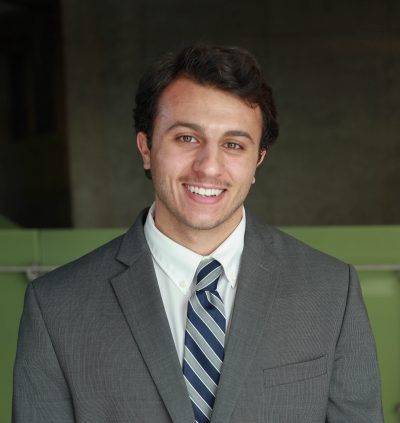
Adam Abdulrahman is a PhD Candidate and Contract Instructor at the Sprott School of Business. Supervised by Dr. Isaac Otchere, his research focuses on corporate stock splits and managerial behaviour in financial markets.
What motivated you to pursue a PhD, and why did you choose the Sprott School of Business?
I knew early on that I wanted to become a professor. I was influenced by the impact my own finance professor had, not just in terms of knowledge, but in shaping careers. What fascinated me was that it combined two things I have always found exciting: teaching and research. Having a job that lets you do both really gave me that motivation. As for Sprott, I did my undergrad and my MBA here, so it was a natural decision. I saw the faculty, the atmosphere, and the emphasis they put on mentorship. Everything led me to think: I am just going to continue my entire academic career here.
How has your experience in the program evolved since you started?
The PhD lets you experience all aspects of academia. You start as a student with course loads and deadlines, then you become a teaching and research assistant. Once your coursework is done, you move into the thesis stage, where you basically have the life of a researcher. There is no organized schedule. You have to motivate yourself day by day. It is challenging, but really exciting.
What have been some of the most valuable learning experiences during your PhD so far?
Persistence. Giving up is not an option, especially in research. If results are not what you are looking for, or you cannot solve a problem, you cannot just drop it and move on. It builds real determination. There is always a solution, and no matter how hard it is, you just keep working at it and eventually, fingers crossed, you figure it out. A lot of what I have learned is life skills, rather than specific school skills.
Can you tell us about your current research and what inspired it?
My thesis focuses on companies that split their stocks frequently. My supervisor and I call them serial splitters. I look at why they keep doing it. Is it overconfidence? Personal advantages tied to compensation? Or are they learning from experience? I also examine how markets react and how companies perform before and after these decisions. I have also published a paper with my supervisor on sustainability in pension funds, and I am currently collaborating with another professor on how artificial intelligence has progressed in finance and accounting research over the last 20 years.
What real-world problems or gaps is your research aiming to address?
I am looking at managerial behaviour and holding managers accountable. Average investors often take things as they are without thinking about why companies do what they do. I am asking: why are you doing that, and why repeatedly? Is it for selfish reasons? And are markets and investors actually holding these CEOs accountable? Those are questions that matter to anyone who invests or just wants to understand how the companies around us operate.
How has this experience shaped your goals for the future?
It has only strengthened my desire to become a professor. I have had the opportunity to teach three courses, and each one has increased that desire. It gave me firsthand experience engaging with students in Introductory Finance and, hopefully, making finance fun for them. I have had students stay in touch well after the semester ended, just because of the connections we developed. That is what this is all building toward.