Descriptions Archive
-
Accommodation can be booked at the Baha Mar resort. Book your stay here [insert link] and use code [insert code]
-
Persons holding a valid Canadian passport or permanent resident card DO NOT require a visa to enter The Bahamas. Passports, must be valid for at least 3 months from the date of return if travelling direct from Canada, and 6 months if transiting through the United States.
-
- Business casual attire
- Appropriate attire for if you choose to do any activities (i.e. yoga, golf, etc.)
- Bahamian or US dollars
- Passport and a second piece of ID
-
[insert verbiage]
-
Address
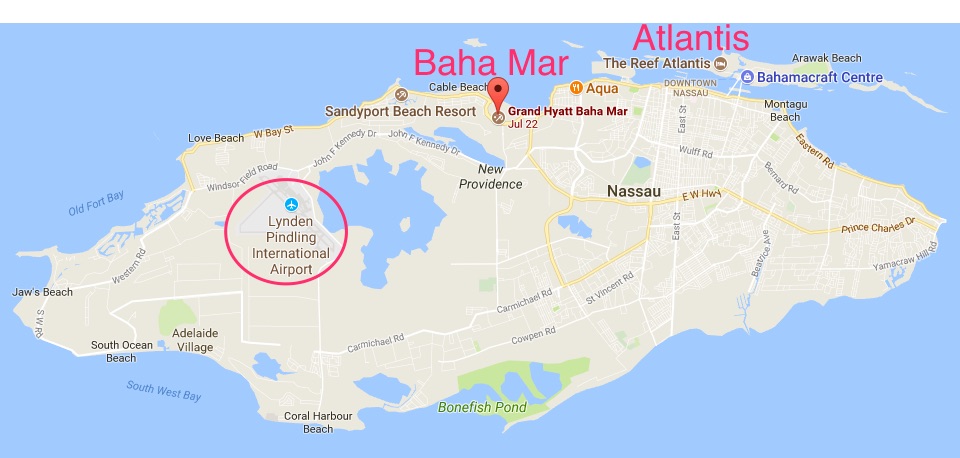
One Baha Mar Boulevard, Nassau, The Bahamas.Baha Mar Resort is a 13 minute drive from the Lynden Pindling International airport. Taxis are available at the airport to travel to the resort. You can also book transportation with Baha Mar’s approved vendors via online reservation. For more details on how to book this transportation or for further information about Baha Mar, visit: Baha Mar
-
The cost of the conference, welcome reception, and most meals except two dinners, materials for the conference, amenities, and a unique experience!
-
Early bird registration (ends March 15th) – $4,495 USD
Registration after March 15 – $5,495 USD
-
Carleton University Employee Career Development Fund
The Career Development Fund (CDF) is available to Carleton employees who wish to pursue training associated with their career development objectives within the University.
The $2000 limit will be based on the date of reimbursement of fees/expenses with the May 1st to April 30th fiscal year.
Applications should be submitted four weeks prior to the start of your course to allow for assessment and approval of the learning opportunity.
To learn more about the application and approval process, please visit the Career Development Fund website.
-
Module 1 (half a day): Energy Evaluation and Assessment ToolsModule 2 (half a day): Renewables, Intermittency, and the Electrical Grid
Module 3 (half a day): Sustainable Energy Policies and Programs
Module 1 (half a day): Energy Evaluation and Assessment Tools
Faculty: Dr. Stephan Schott – Professor School of Public Policy and Administration, Faculty of Public Affairs, Carleton University
Module Objective and Learning Outcomes:
The objective of the module is to introduce some of the major assessment methods and tools used in the energy sector and to teach students how to critically apply concepts and models to contemporary energy issues and challenges. Students will learn to deploy appropriate techniques and metrics — including those related to technical features, efficiency, social aspects, economic cost and environment impact – and to evaluate the performance of energy systems.
Overview:
Evaluation methods and assessment tools are explored and discussed in the specific context of the energy sector with a focus on technology, finance, markets and policy. This module will provide an introduction to cost-benefit analysis methodologies, valuing benefits and costs in energy markets, shadow pricing and discounting. This is followed by an introduction to multiple objective analysis and the evaluation of alternative energy systems including the investment into new renewable energy sources. Various components will be illustrated with practical examples and interactive exercises. Students will get the chance to apply some of the methods and models in an applied integrated project with the other modules.
Outline:
- Stages of a cost-benefit analysis
- Valuing benefits and cost over time
- Cost effectiveness tests in the energy sector
- Multiple criteria analysis
- Avoided cost analysis and the net benefits of alternative energy systems
Module 2 (half a day): Renewables, Intermittency, and the Electrical Grid
Faculty: Dr. Jean Duquette – Assistant Professor, Department of Mechanical and Aerospace Engineering, Faculty of Engineering and Design, Carleton University
Module Objective and Learning Outcomes:
The objective of this module is to introduce students to key aspects of the basic energy system architecture and provide them with an understanding of the main challenges associated with integrating sustainable energy sources in the electrical grid. Students will learn to use Excel-based modeling tools for assessing local energy sources and selecting and sizing appropriate energy conversion systems. A key outcome of the module will be to quantify the technical and environmental impacts of displacing carbon-based technologies with sustainable alternatives.
Overview:
Components of an energy system are introduced and service delivery pathways are explained. Primary energy sources (alternative vs. traditional) are presented and characterized by frequency, density, and intermittency, bringing to light the problem of temporal mismatch between sources and loads. Statistical representations of load such as the load duration curve are shown as a tool for understanding conventional grid operation approaches (in both regulated and deregulated markets) and a screening curve methodology is presented as a means for determining the energy mix in any given jurisdiction. Finally, the concept of treating sustainable energy generation as a negative load is introduced to gauge the short- and long-term impacts of integrating an intermittent source in a fossil-fuel dominated energy system. A run-of-river hydro application is presented to demonstrate the various technical steps of a sustainable energy project that are required from start to finish such as the resource assessment, sizing of the turbine, and annual energy evaluation.
Outline
- Basic energy system architecture: energy source characteristics
- The electrical grid – load and market structure
- Short- and long-term impacts of increasing intermittent renewable energy generation in the electrical grid
- Mitigating the impacts of intermittency
- The big picture – improved energy system architecture and efficiency
- Renewable energy technology focus: Run-of-river hydro
Module 3 (half a day): Sustainable Energy Policies and Programs
Faculty: Dr. Alexandra Mallett – Associate Professor, School of Public Policy and Administration, Faculty of Public Affairs, Carleton University
Module Objective and Learning Outcomes:
The objective of the module is to provide a high-level overview of policy making and government (in a Canadian context) and then examining relevant policies and programs applicable to community-level sustainable energy projects. Through this module students will demonstrate an understanding of the range and substance of policies and programs related to community-level sustainable energy deployment in Canada.
Overview:
This module will first provide an overview of how political systems work (with a focus on federal, provincial/territorial, and municipal governments), the role of institutions and the operation of the executive, judiciary, legislation, and bureaucracy. Next, the module will turn to public policy – its purpose and assessment. This includes problem definition, goals and the mechanisms to achieve said goals. In addition, this section will examine the various lenses through which to examine public policy (e.g. rational lens, Indigenous lens, Gender-Based Analysis + (GBA+), and environment and climate change). From there, the module will turn to sustainable energy policy design and the choice of policy instruments. At a broad level, this can include a continuum of ‘doing nothing’ to the direct provision of goods and services (e.g. education, military). However, the module will focus on what are termed indirect instruments or those policy tools that seek to change the behaviour of individuals, firms, and / or groups. These instruments include information (e.g. advertisement campaigns), expenditure (e.g. tax breaks and / or grants), and regulation (e.g. requiring a permit to install a renewable energy system to a community-level stand-alone electricity grid). This section will also cover the criteria that governments often use when making decisions around which policies / programs to pursue (effectiveness, efficiency, fairness/distributional effects, and political considerations). From there, the module will turn to the mechanics of some of the principal policies and programs seen in the context of sustainable energy policies and program (e.g. a carbon tax, a regulation around the amount of renewable energy penetration a community can have, the proposed Clean Electricity Standard at the federal level, etc.). The module will conclude with policy / program implementation and evaluation and their potential effects on community-level sustainable energy projects.
Outline
- Political systems, institutions, government (federal, provincial/territorial, municipal)
- Why public policy (problem definition, goals, instruments)
- Policy design (information, expenditure and regulation) and choice (assessment criteria typically used by governments)
- Mechanics of some of the main sustainable energy policies and programs in Canada
- Policy / program implementation and evaluation
Module 4 (half a day): Pursuing Sustainable Energy Options at the Community-level: an integrated hands-on example
Faculty: Dr. Jean Duquette – Assistant Professor, Department of Mechanical and Aerospace Engineering, Faculty of Engineering and Design, Carleton University
Dr. Stephan Schott – Professor, School of Public Policy and Administration, Faculty of Public Affairs, Carleton University
Dr. Alexandra Mallett – Associate Professor, School of Public Policy and Administration, Faculty of Public Affairs, Carleton University
Module Objective and Learning Outcomes:
The objective of the module is to provide a hands-on opportunity to assess the feasibility of a renewable energy electricity generation project for a remote community within Canada.
Overview:
This module will provide an opportunity of students to apply the principles taught in modules 1-3 in an integrative realistic exercise.
Outline
- Technical assessment of the status quo and the renewable energy alternative
- Community preferences and multiple criteria analysis
- Avoided costs and net benefits of the alternative system
- Considering the socio-political context and program implementation
-
The Agile framework enables teams to complete complex projects successfully, and it looks deceptively simple. Understand key elements of Agile and Scrum and how to apply them to any project. Train yourself and your team in Agile to achieve world-class project results.
This module will explore how your project teams can quickly and successfully transition to an effective Agile environment.
Key Learning Objectives include:
- How to implement Agile: What it takes to make it work
- How to integrate Agile Scrum with current project methodologies in your organization and create high levels of visibility and trust with stakeholders
- Assigning individual roles and responsibilities: professionally plan, manage and close requirements
- Ensure your project delivers required functionality and adds value to the business
- Create an environment of high performance and self-management for your project team.
Agile and Scrum Introduction
- What is Agile Scrum?
- Review the Agile lifecycle
- Define Roles and Responsibilities
- Identify common obstacles to overcome
Sprint Preparation
- Envisioning the product and project
- Assembling the Agile team
- Compile the product backlog (course grain requirements)
- Planning and finalizing iterations
- Embracing the high-level plan
- Scheduling the Agile Scrum project ceremonies
Sprint Execution
- Use Agile Scrum to clarify requirements, roles, and key development processes effectively
- Harness changing requirements and communicate these changes to key stakeholders
- Establish a team culture of excellence and good design
- Measure project success often and accurately
- Integrate Agile with your current project analysis approach
Sprint Closure
- Prepare for Sprint reviews and what is needed to be successful
- Obtain customer acceptance of product increments
- Manage sprint retrospectives to encourage a self-organizing team
Earn PDU’s
- Attendees of this program are entitled to 14 Continuing Development Units from the International Institute of Business Analysis upon completion.
- Attendees of this program are entitled to 14 Professional Development Units from the Project Management Institute upon completion.
-
Real-life business problems can become very complex, which create difficulties in analysis. Modeling the business problem brings clarity and understanding from all stakeholders. In this workshop, you will learn the key analysis models BAs use to analyze, formalize and validate business and system requirements. You will also learn the purposes and strengths of the models and which are right for your project and fit your organization’s culture.
What you will learn
- Techniques to document, analyze and redesign business processes
- Process modeling with BPMN
- How to build a logical data model to represent an organization’s information requirements and business rules
- Linking business rules to requirements and use cases
- How to develop a use case model, considered to be industry best practice in representing functional requirements
- Advanced modelling techniques
Program Content
Enterprise Analysis
- Evaluate proposed business initiatives for viability and organizational advantage
- Tips for a successful business case
Overview of Concepts and Environment
- What is a project?
- Examples of projects/BA involvement in project selection
- Why projects fail
- The project triple constraint and the BA
- Project relationships between the project manager and the business analyst
Planning and the BA
- Understand the importance of the planning and managing aspect in the role of the BA
- Understand team roles
- Identify and analyze stakeholders
- Determine product scope
- Determine appropriate methodology
- Develop a Work Breakdown Structure (WBS) that is requirements driven, focusing on planning, testing and managing responsibilities
- Select and estimate requirements activities in all phases of the project
- Understand how project progress is monitored and controlled
Risk and the BA
- Risk management planning
- Risk Identification
- Qualitative risk analysis
- Quantitative risk analysis
Validating and the BA
- Examine the importance of testing and testing strategies
- Develop a high level test plan
Managing Requirements
- Identify, analyze, and manage requirements change
- Identify the means to perform requirements traceability throughout the project
-
This course teaches you how to elicit, document and identify correct user requirements. You will learn in depth the key techniques to communicate with stakeholders
and capture their requirements, their purposes, strengths and when to apply them.
What you will Learn:
- Understand the responsibilities of the business analyst in requirements
- Elicitation methods for Agile, Waterfall and Iterative
- Communicating with stakeholders
- Know elicitation techniques, their purposes, strengths and weaknesses
- Characteristics of excellent requirements
- Requirements acceptance and problem solving
Earn PDU’s
- Attendees of this program are entitled to 21 Continuing Development Units from the International Institute of Business Analysis upon completion.
- Attendees of this program are entitled to 21 Professional Development Units from the Project Management Institute upon completion.
Program Content
Enterprise Analysis
- Evaluate proposed business initiatives for viability and organizational advantage
- Tips for a successful business case
Overview of Concepts and Environment
- What is a project?
- Examples of projects/BA involvement in project selection
- Why projects fail
- The project triple constraint and the BA
- Project relationships between the project manager and the business analyst
Planning and the BA
- Understand the importance of the planning and managing aspect in the role of the BA
- Understand team roles
- Identify and analyze stakeholders
- Determine product scope
- Determine appropriate methodology
- Develop a Work Breakdown Structure (WBS) that is requirements driven, focusing on planning, testing and managing responsibilities
- Select and estimate requirements activities in all phases of the project
- Understand how project progress is monitored and controlled
Risk and the BA
- Risk management planning
- Risk Identification
- Qualitative risk analysis
- Quantitative risk analysis
Validating and the BA
- Examine the importance of testing and testing strategies
- Develop a high level test plan
Managing Requirements
- Identify, analyze, and manage requirements change
- Identify the means to perform requirements traceability throughout the project
Page 2 of 3